Elevating Digital Communication with Infographic Glyph Icons Across All Formats
In the current landscape of digital design and content marketing, the ability to convey complex information rapidly is not merely an advantage; it is a fundamental requirement. As professionals, creators, and entrepreneurs navigate an increasingly saturated market, the visual vocabulary used to communicate value propositions must be both precise and versatile. This necessity has brought the Infographic Glyph Icon to the forefront of modern design strategy. Unlike decorative illustrations or generic clip art, these specialized visual assets serve as functional components of user interface design and data storytelling. They bridge the gap between raw data and human comprehension, offering a streamlined aesthetic that supports clarity across websites, mobile applications, and printed collateral.
The relevance of this asset class extends beyond simple aesthetics. It touches upon broader shifts in consumer behavior, technological adaptation, and the evolving workflows of creative teams. Understanding how to leverage these icons across multiple formats—.AI, .EPS, .SVG, .JPG, and .PNG—is essential for maintaining brand consistency and operational efficiency in a multi-platform ecosystem.
The Functional Role of Glyphs in Modern Information Architecture
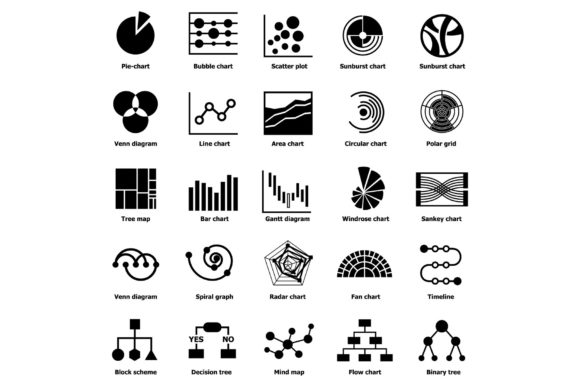
To understand why the Infographic Glyph Icon has become indispensable, one must first distinguish it from other iconographic styles. A glyph is inherently reductive. It strips away unnecessary detail to focus entirely on symbolic recognition. In the context of infographics, this reduction is critical. When presenting statistical data, timelines, or process flows, visual noise competes with the message. Glyphs act as cognitive anchors, allowing users to scan content and grasp hierarchical relationships without reading dense paragraphs.
This functionality aligns perfectly with current trends in user experience (UX) and user interface (UI) design. We are witnessing a shift toward minimalist maximalism, where interfaces appear clean and uncluttered, yet contain immense depth of information. The glyph facilitates this by occupying minimal screen real estate while delivering maximum semantic value. For marketers and business leaders, this translates to higher engagement rates. Users are more likely to interact with a dashboard or a landing page that uses intuitive visual signifiers rather than text-heavy explanations. The glyph is no longer just a decoration; it is a navigational tool and a data visualization element rolled into one.
Adapting to Cross-Platform Workflows and Device Diversity
The modern creative workflow is rarely linear or confined to a single medium. A campaign might launch with a responsive website, extend to a native mobile application, appear in social media carousels, and conclude with a printed white paper. This fragmentation creates significant challenges for asset management. Here, the availability of Infographic Glyph Icons in comprehensive format packages becomes a strategic asset rather than a mere convenience.
Vector Formats (.AI, .EPS, .SVG): These are the backbone of scalable design. For web developers and app designers, the .SVG format is particularly transformative. Scalable Vector Graphics ensure that glyphs remain crisp on high-density retina displays and foldable screens without increasing file size. This directly impacts Core Web Vitals and SEO performance, as lightweight vector assets load faster than raster alternatives. Meanwhile, .AI and .EPS files serve the print and branding teams, allowing for infinite resizing on billboards or business cards without pixelation. Having source files also enables designers to customize stroke weights and colors to match specific brand guidelines, ensuring the icon system feels proprietary rather than stock.
Raster Formats (.JPG, .PNG): Despite the dominance of vectors, raster formats remain vital for compatibility and rapid deployment. .PNG files with transparent backgrounds are the standard for presentation decks, email newsletters, and CMS platforms that may not support SVG rendering natively. .JPG formats, while less common for icons due to compression artifacts, still hold utility in legacy systems or specific social media ad placements where universal compatibility is required. Providing these formats alongside vectors acknowledges the reality that not every stakeholder in a project has access to Adobe Illustrator or Figma. It democratizes design assets, allowing marketers and non-designers to utilize professional-grade visuals without technical friction.
Market Trends Driving the Demand for Specialized Visual Assets
The surge in attention toward high-quality Infographic Glyph Icons is symptomatic of larger industry movements. Several converging trends have elevated their status from optional embellishments to core business assets.
The Rise of Data Literacy and Visual Storytelling
As organizations become more data-driven, the audience for that data has expanded beyond analysts to include customers, investors, and the general public. However, data literacy varies significantly across these groups. Businesses are under pressure to make their metrics accessible. The Infographic Glyph Icon serves as a translation layer. By associating abstract concepts like "year-over-year growth," "user retention," or "carbon footprint" with consistent visual symbols, companies can reduce cognitive load. This trend is evident in annual reports, sustainability disclosures, and SaaS pricing pages, where glyphs guide the viewer through complex narratives effortlessly.
Accessibility and Inclusive Design Standards
Regulatory and ethical standards regarding digital accessibility are tightening globally. WCAG (Web Content Accessibility Guidelines) compliance is now a baseline expectation. Well-designed glyphs contribute to accessibility when implemented correctly. They provide visual context that supports text labels, aiding users with cognitive disabilities or those who speak different languages. However, this only works if the icons are distinct and universally recognizable. Generic or overly stylized icons can actually hinder accessibility. Therefore, the market is shifting toward glyph sets that prioritize clarity and semantic accuracy over artistic flair, ensuring that visual communication remains inclusive.
Efficiency in Agile Creative Operations
The pace of digital marketing and product development has accelerated. Teams operating on agile sprints cannot afford to commission custom illustrations for every new feature or blog post. Pre-packaged, multi-format icon libraries offer a middle ground between bespoke design and generic stock. They provide a cohesive visual language that can be deployed instantly. This efficiency allows freelancers and agencies to maintain high output quality without sacrificing speed. It also ensures long-term consistency; as a product evolves over years, having a standardized library prevents the visual drift that often occurs when multiple designers work on the same project sequentially.
Practical Applications and Strategic Implementation
Understanding the theory behind Infographic Glyph Icons is necessary, but practical application drives value. Professionals should consider several key areas where these assets yield the highest return on investment.
- SaaS Dashboards and Analytics: Use glyphs to categorize data streams. A consistent set of icons for "revenue," "churn," "traffic," and "conversion" allows users to build mental models of the interface quickly. Utilizing SVGs here ensures performance remains optimal even when hundreds of data points are rendered simultaneously.
- Corporate Reporting and Investor Relations: Transform dense PDF reports into scannable documents. Use EPS or AI files to create high-resolution infographics that summarize quarterly results. Visual summaries increase the likelihood that key stakeholders will absorb the critical takeaways.
- Educational Content and Onboarding: Whether for internal employee training or customer onboarding, glyphs break down step-by-step processes. Using PNGs in slide decks or LMS platforms helps segment information into digestible chunks, improving retention and reducing support ticket volume.
- Responsive Web Design: Implement SVG sprites or inline SVGs to create interactive elements that respond to hover states or dark mode toggles. This level of interactivity signals professionalism and attention to detail, enhancing brand perception.
Future-Proofing Your Visual Asset Library
As we look toward the next phase of digital evolution, the importance of owning versatile, multi-format assets will only grow. Emerging technologies like augmented reality (AR) and spatial computing require 3D-ready or highly scalable 2D assets. While current Infographic Glyph Icons are primarily 2D, possessing the .AI or .EPS source files positions organizations to adapt these symbols for future immersive environments. Furthermore, as AI-generated imagery becomes more prevalent, human-curated, semantically precise glyph libraries will retain value because of their reliability and brand safety. AI can generate images, but it struggles to maintain the strict systemic consistency required for enterprise-grade infographics.
Ultimately, investing in comprehensive Infographic Glyph Icon packages is an investment in communication infrastructure. It reflects an understanding that in a world defined by information overload, clarity is the ultimate luxury. By securing assets in .AI, .EPS, .SVG, .JPG, and .PNG formats, professionals ensure they are equipped to meet current demands while remaining adaptable to future shifts in technology and consumer preference. The goal is not just to decorate a webpage or an app, but to build a resilient visual language that scales with the business and resonates with an increasingly sophisticated audience.