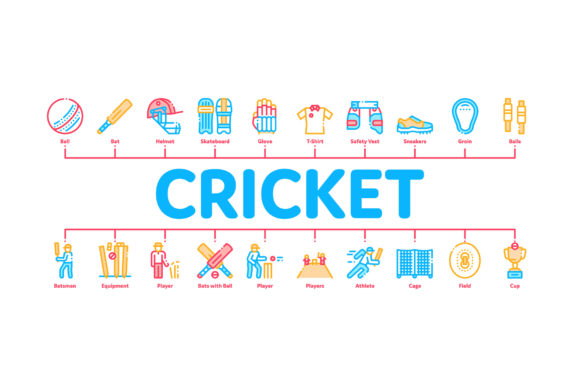
Evaluating the Cricket Game Minimal Infographic Banner for Professional Design Workflows
In the fast-paced environment of digital marketing and content creation, finding visual assets that balance aesthetic appeal with functional utility is a constant challenge. The Cricket Game Minimal Infographic Banner represents a specific category of design resource that prioritizes clarity over complexity. For professionals managing sports-related campaigns, educational content, or event promotions, this type of vector-based asset offers a streamlined solution to common layout problems. Rather than relying on heavy photography or cluttered compositions, this minimal infographic approach uses distinct iconography—cricket balls, bats, apparel, and trophies—to communicate information efficiently.
The value of this resource lies not just in its visual style, but in its technical construction. Available in both JPG and EPS formats, it bridges the gap between immediate web use and long-term print adaptability. When evaluating whether to integrate this Cricket Game Minimal Infographic Banner into a production workflow, it is essential to look beyond the surface aesthetics and consider how the file structure, illustration quality, and semantic relevance perform under real-world constraints. This analysis explores the practical applications, technical specifications, and strategic fit for marketers, designers, and publishers working within the cricket niche.
Visual Composition and Semantic Clarity
The primary strength of a minimal infographic banner is its ability to reduce cognitive load. In cricket content, where statistics, player profiles, and equipment specifications often compete for attention, a clean visual hierarchy is necessary. This banner utilizes recognizable symbols—the cricket ball and bat, T-shirt and spike sneakers, gaming equipment, and cup illustrations—as anchor points for information. These elements are not merely decorative; they serve as navigational cues that guide the viewer’s eye through the data.
From a user experience perspective, this semiotic approach is highly effective. The illustration of spike sneakers immediately signals performance or gear reviews, while the cup illustration universally denotes tournaments or achievements. By isolating these icons against a negative space background, the design ensures that text overlays remain legible. This is a critical consideration for web banners where accessibility and readability directly impact engagement metrics. Unlike photorealistic backgrounds that often require darkening or blurring to support text, the flat or semi-flat vector style of this Cricket Game Minimal Infographic Banner maintains high contrast ratios without additional post-processing.
Technical Versatility Across Formats
The inclusion of both JPG and EPS formats addresses two distinct phases of the content lifecycle. The JPG serves as a ready-to-deploy asset for social media headers, blog post thumbnails, or email newsletters. It is optimized for speed and compatibility, requiring no specialized software to view or implement. However, the true professional value resides in the EPS (Encapsulated PostScript) file. Vector graphics are resolution-independent, meaning the banner can be scaled from a mobile web header to a large-format stadium display without pixelation or artifacting.
For designers and freelancers, the EPS format provides necessary editability. Layers in vector files typically allow for color adjustments to match brand guidelines, resizing of specific elements like the gaming equipment or bat, and complete text replacement. This flexibility transforms a static template into a dynamic design system. If a client requires a shift from a traditional red-and-white cricket palette to a modern neon T20 league aesthetic, the vector source file makes this transition seamless. Raster-only alternatives would force a complete redesign, whereas this asset supports iterative adaptation.
Practical Applications in Digital and Print Media
Understanding where this asset performs best helps determine its return on investment. The Cricket Game Minimal Infographic Banner is particularly well-suited for environments where information density must be balanced with visual breathing room.
- Sports Journalism and Blogging: For articles analyzing match statistics or player gear, the banner acts as a consistent visual header that reinforces the topic without distracting from the written analysis.
- E-Commerce and Retail: Online stores selling cricket equipment can use the segmented layout to highlight product categories. The T-shirt and sneaker illustrations provide natural placeholders for linking to specific inventory pages.
- Event Promotion: Tournament organizers can utilize the cup and bat motifs to create cohesive signage packages. The minimal style ensures the branding looks professional across both digital tickets and physical wayfinding signs.
- Educational Content: Coaching academies and schools benefit from the clear iconography when creating instructional materials. The gaming equipment illustration is especially relevant for modern training modules that incorporate technology and simulation.
In each of these scenarios, the asset solves a specific communication problem. It is not a generic sports background; it is a structured container for cricket-specific messaging. This specificity reduces the time spent searching for relevant imagery and increases the consistency of the final output.
Audience Fit and Professional Utility
While the asset is accessible to hobbyists, its architecture suggests it was designed with professional workflows in mind. Marketers and agency teams will appreciate the standardized dimensions and clean layer organization, which facilitate rapid turnaround times. Freelancers working with multiple sports clients can maintain a library of such minimal vectors to ensure quick delivery without sacrificing quality. Educators and coaches, who may lack advanced design skills, benefit from the pre-arranged composition that guarantees a polished look even with basic editing.
However, it is important to manage expectations regarding customization. Users unfamiliar with vector editing software like Adobe Illustrator or CorelDRAW may find the EPS file intimidating. While the JPG is universally usable, unlocking the full potential of the Cricket Game Minimal Infographic Banner requires at least intermediate proficiency in vector manipulation. Additionally, because the style is intentionally minimal, it may not suit projects requiring gritty, atmospheric, or photographic realism. It is a tool for clarity and structure, not for emotional storytelling through texture and light.
Evaluating Long-Term Value and Consistency
Trends in sports design cycle rapidly, but minimalism has proven to be a resilient aesthetic in information design. The reliance on fundamental shapes and solid colors insulates this banner from looking dated compared to trend-heavy 3D renders or complex grunge textures. This longevity is a key factor in assessing value. A well-constructed vector asset can remain in rotation for years, serving as a reliable fallback for seasonal campaigns or evergreen content.
Consistency is another metric where this asset excels. When building a brand identity around cricket, maintaining visual coherence across different touchpoints is difficult. Using a unified set of illustrations—the same line weight for the bat, the same geometric treatment for the ball—creates a subconscious association for the audience. The Cricket Game Minimal Infographic Banner provides this stylistic unity out of the box. For small business owners and publishers, this eliminates the need to hire an illustrator for every new campaign, significantly reducing overhead costs while maintaining professional standards.
Limitations and Considerations
No single asset is universally perfect. Prospective users should be aware of potential limitations. The "gaming equipment" illustration, while useful for modern contexts, may require verification to ensure it matches the specific technology referenced in your content. Generic representations of VR headsets or smart sensors might need updating as hardware evolves. Furthermore, cultural nuances in cricket attire or equipment styles vary by region; a minimal vector created for one market might not perfectly resonate with another. Always review the specific iconography against your target audience's expectations before deployment.
Additionally, while the minimal style aids readability, it places greater emphasis on typography. Because the background is understated, poor font choices or bad kerning will be immediately visible. The banner supports good design, but it does not compensate for weak typographic execution. Users should pair this asset with clean, legible typefaces that complement the geometric nature of the illustrations.
Making the Decision for Your Project
Ultimately, the decision to utilize the Cricket Game Minimal Infographic Banner should be driven by project requirements rather than novelty. If your goal is to present data, categorize products, or create a clean header for informational content, this asset is a high-utility choice. Its combination of JPG accessibility and EPS scalability covers the spectrum from quick social posts to professional print collateral. The specific inclusion of cricket-centric elements like spike sneakers and cups ensures relevance, while the minimal aesthetic guarantees versatility.
For professionals aged 20 to 50 navigating the demands of modern content production, efficiency and quality are paramount. This banner offers a pragmatic solution that respects both. It acknowledges that in professional design, the best visual is often the one that communicates the message most effectively without unnecessary noise. By integrating this resource thoughtfully, creators can elevate their cricket-related projects with a level of polish and consistency that resonates with informed audiences. Whether you are launching a new blog series, updating an e-commerce storefront, or designing tournament materials, this minimal infographic banner provides a solid, adaptable foundation for visual communication.