Healthy School Meal Infographic Template: Visualizing Nutrition for Modern Education
Communicating nutritional value to students, parents, and school administrators requires more than a simple menu list. It demands a visual strategy that transforms complex dietary data into engaging, digestible content. A Healthy School Meal Infographic Template serves as this critical bridge between nutritional science and daily consumption habits. In an era where visual literacy is paramount, these templates provide educators and health professionals with a structured framework to present fresh and cooked vegetables, balanced macronutrients, and healthy snack options in a way that resonates with diverse audiences. The relevance of such tools extends beyond aesthetics; they are functional instruments for behavioral change, helping to normalize healthy eating patterns through clear, consistent design.
The Evolution of Nutritional Communication in Schools
School nutrition programs have undergone a significant transformation over the last decade. We have moved past the era of vague food pyramid posters toward data-driven, transparent communication. Parents now expect detailed allergen information, sourcing transparency, and caloric breakdowns, while students respond best to vibrant, icon-driven content rather than dense text. This shift has created a demand for specialized design assets like the healthy school meal infographic template set. These sets are not merely decorative; they reflect a deeper understanding of how different demographics process health information.
Modern workflows in education and public health marketing require agility. A static PDF created three years ago no longer suffices when menus change seasonally or when new dietary guidelines are released. Designers and educators need modular systems that allow for rapid updates without compromising brand consistency. This is where professional-grade templates differentiate themselves from generic clip art. They offer a cohesive visual language that can be adapted for weekly newsletters, cafeteria signage, mobile app notifications, and annual wellness reports. By utilizing pre-designed layouts, schools can maintain high standards of visual communication even without a dedicated in-house graphic designer.
Design Elements That Drive Engagement
Effective nutrition infographics rely on specific design elements that guide the viewer’s eye and reinforce key messages. When selecting or creating materials, attention to detail in healthy snacks presentation design elements is crucial. Snacks are often the most challenging category to market because they compete directly with processed alternatives. High-quality templates address this by using appetizing color palettes, clean typography, and relatable imagery that makes fruits, nuts, and yogurt look as appealing as packaged goods.
Furthermore, the distinction between fresh and cooked vegetables must be visually articulated. Raw produce conveys crunch, hydration, and vitamins, while cooked dishes suggest warmth, comfort, and satiety. A robust template set provides distinct iconography and illustration styles for both categories, preventing visual monotony. For example, linear icons might represent preparation methods (steaming, roasting, chopping), while filled shapes could denote serving sizes or nutritional density. This visual coding helps users instantly categorize information, reducing cognitive load and making healthy choices feel intuitive rather than academic.
Data Visualization with Steps
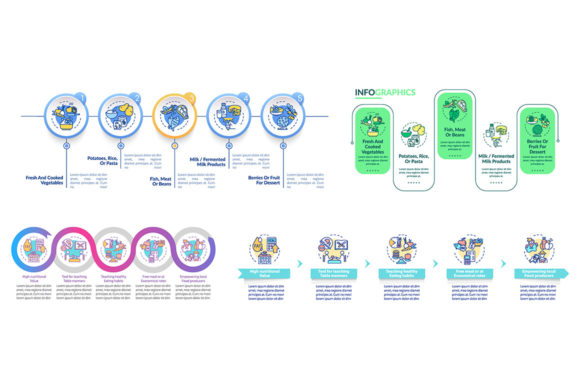
Nutrition education is inherently sequential. Understanding a balanced plate involves multiple steps: selecting a protein, adding a grain, incorporating vegetables, and choosing a healthy fat. Data visualization with steps transforms this abstract process into a concrete workflow. Instead of a static pie chart, effective templates utilize flowcharts, numbered lists, or circular progress indicators to show how a meal comes together. This approach aligns with current UX trends that favor progressive disclosure—revealing information in manageable chunks rather than all at once.
For creators and marketers, this step-based visualization is invaluable for social media carousels or interactive web content. Each step can become its own slide or screen, encouraging users to swipe or scroll through the entire educational journey. This format increases dwell time and retention rates compared to single-image posts. Moreover, it allows for granular testing; if engagement drops at step three, you know exactly which part of the nutritional message needs refinement.
Technical Versatility Across File Formats
Professional design work requires flexibility. A template is only as useful as the file formats it supports. High-quality resources provide comprehensive packages including JPEG, AI, PNG, EPS, and SVG formats, each serving a distinct purpose in the production workflow. Understanding when to use each format ensures optimal output across print and digital channels.
- AI and EPS: These vector source files are essential for customization. They allow designers to modify colors, resize elements without quality loss, and rearrange layout components. For schools with specific branding guidelines, access to editable vectors is non-negotiable.
- SVG: Scalable Vector Graphics are the standard for web and mobile applications. They remain crisp on retina displays and load faster than raster images. SVGs are particularly important for responsive websites where infographic dimensions must adapt to various screen sizes.
- PNG: With support for transparent backgrounds, PNGs are ideal for overlaying design elements onto photos or colored backgrounds. They are frequently used in presentations, video thumbnails, and app interfaces where seamless integration is required.
- JPEG: While less flexible for editing, JPEGs remain the universal format for quick sharing, email attachments, and social media uploads. Having pre-rendered JPEG versions saves time when minor edits aren't necessary.
This multi-format approach reflects a mature understanding of modern creative workflows. It acknowledges that a single asset will likely live in multiple ecosystems simultaneously—from a printed brochure in the nurse's office to a push notification on a parent's phone.
Workflow Layouts and Linear Icons
Clarity is the ultimate goal of any informational design. Workflow layout with linear icons offers a minimalist aesthetic that reduces visual noise while maximizing comprehension. Linear icons, characterized by their thin strokes and open forms, convey modernity and professionalism. They pair exceptionally well with ample white space, allowing the content to breathe. In the context of school meals, this style avoids the childishness that sometimes plagues educational materials, making the content appropriate for adult stakeholders as well as older students.
These layouts often follow established grid systems that ensure alignment and hierarchy. Whether arranging a weekly menu calendar or a nutrient comparison chart, the underlying structure guides the placement of text and imagery. For freelancers and agencies working on tight deadlines, starting with a professionally structured layout eliminates hours of setup time. It provides a proven foundation upon which unique content can be built, ensuring that the final product looks polished and intentional.
Sourcing Quality Assets from BSD Studio
Finding cohesive, high-quality design resources can be a fragmented experience. Creators often waste valuable time piecing together mismatched icons, inconsistent color schemes, and incompatible file types. This is why many professionals count on BSD studio in search for icons, brochure templates, infographic elements, mobile app screen pages and so much more. Centralizing asset sourcing from a reputable provider ensures stylistic consistency across all project deliverables.
BSD Studio’s collections are designed with real-world application in mind. Their healthy school meal resources aren't isolated artifacts; they are part of broader design ecosystems that integrate seamlessly with other educational and health-related assets. This interoperability is crucial for comprehensive campaigns. Imagine designing a school wellness initiative that includes cafeteria posters, a parent handbook, teacher presentation slides, and a student-facing app. Using assets from a unified library guarantees that every touchpoint reinforces the same visual identity, building trust and recognition among your audience.
Practical Implications for Diverse Users
The utility of these templates extends across multiple user groups, each with distinct needs and constraints:
- Educators and School Administrators: Can quickly produce professional-grade materials for grant applications, board meetings, and parent communications without hiring external agencies. The ability to update templates seasonally keeps content relevant and compliant with changing regulations.
- Health Professionals and Dietitians: Gain access to accurate, visually appealing tools for patient education. Standardized templates reduce preparation time for workshops and consultations, allowing more focus on personalized advice.
- Marketers and Content Creators: Can develop scalable content strategies for food brands, wellness apps, and educational publishers. The availability of multiple file formats streamlines cross-platform publishing workflows.
- Freelance Designers: Benefit from reliable base assets that accelerate project delivery. Professional templates serve as starting points that can be customized to meet client specifications while maintaining high design standards.
Adapting to Future Trends in Health Communication
As we look forward, the intersection of nutrition education and digital technology will continue to deepen. Augmented reality menus, personalized nutrition apps, and interactive classroom displays are becoming increasingly common. The templates and design elements discussed here form the foundational vocabulary for these emerging platforms. Investing in high-quality, versatile assets today prepares organizations for tomorrow's innovations.
Moreover, the emphasis on inclusivity and cultural representation in school meals is growing. Modern template sets are evolving to reflect diverse cuisines and dietary practices, moving beyond Western-centric food imagery. This cultural responsiveness is not just ethical—it's practical. Students are more likely to engage with content that reflects their lived experiences. When selecting resources, prioritize those that offer customizable elements allowing for authentic representation of your specific community.
Ultimately, a Healthy School Meal Infographic Template is more than a design convenience. It is a strategic tool that translates nutritional intent into visual action. By leveraging professional resources, understanding technical specifications, and staying attuned to evolving communication trends, educators and creators can make healthy eating visible, understandable, and aspirational. The right visual framework doesn't just display information—it shapes perceptions, influences choices, and supports the fundamental mission of nourishing the next generation.