Visualizing Digital Dining: The Strategic Role of Food Order Flat Color Vector Infographics
The Psychology of Flat Design in Culinary Commerce
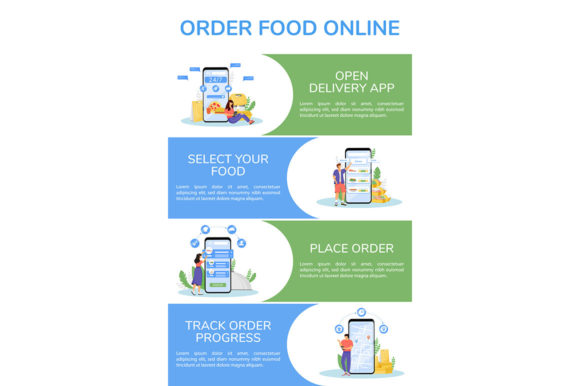
In the rapidly evolving landscape of digital food services, visual communication serves as the primary bridge between a hungry consumer and a complex logistical backend. The Food Order Flat Color Vector Infographic has emerged as a critical asset in this ecosystem, not merely as decoration, but as a functional interface element that reduces cognitive load. Flat design, characterized by its two-dimensional style, bright colors, and lack of ornamental texture, aligns perfectly with the user experience goals of modern food delivery platforms. When users navigate a mobile app or scan a promotional leaflet, they process flat vector imagery significantly faster than photorealistic alternatives. This speed of comprehension is vital when explaining multi-step processes such as contactless delivery, subscription models, or loyalty program tiers.
The psychological impact of this aesthetic cannot be overstated. Flat color vectors evoke a sense of cleanliness, efficiency, and modernity—attributes that are directly transferable to perceptions of food safety and service reliability. By utilizing cartoon characters within these infographics, brands introduce a human element without the uncanny valley effect sometimes associated with stock photography. These stylized avatars guide the viewer’s eye through the narrative, acting as friendly proxies for both the customer and the delivery personnel. For business owners and marketers, understanding this visual language is essential for creating advertising flyers and info banners that convert passive viewers into active users.
Technical Versatility Across Print and Digital Mediums
A defining characteristic of high-quality vector assets is their resolution independence, which dictates their utility across diverse marketing channels. Whether designing a large-format outdoor banner or a compact mobile app poster, the underlying geometry remains crisp. This scalability is inherent to the file formats typically included in professional resource packages. A comprehensive ZIP file containing EPS, JPG, PNG, SVG, and AI formats ensures that creators are never bottlenecked by technical limitations.
- SVG (Scalable Vector Graphics): Essential for web-based infographics and responsive app interfaces. SVGs maintain perfect clarity on retina displays while keeping file sizes minimal, which is crucial for maintaining fast load times on food ordering sites.
- AI (Adobe Illustrator) and EPS: The industry standards for print production. These source files allow designers to modify color palettes to match specific brand guidelines, adjust character poses, or resize elements for booklets and physical menus without quality loss.
- PNG and JPG: While raster-based, these formats provide immediate usability for social media posts, email newsletters, and quick mockups where vector editing software is unavailable.
This multi-format approach supports an omnichannel marketing strategy. A restaurant chain might use the same core food order flat color vector infographic template for an in-store PPT page concept design during a franchise meeting, adapt it for a printed leaflet distributed in local neighborhoods, and simultaneously deploy a cropped version as an Instagram story ad. Consistency across these touchpoints reinforces brand recognition and trust.
Narrative Structures in Service Advertising
Effective service advertising relies on storytelling, and vector infographics provide the structural framework for these narratives. Unlike static food photography, which captures a single moment, an infographic illustrates a journey. In the context of online food delivery, this journey often involves three distinct phases: selection, preparation, and fulfillment. Cartoon characters serve as the protagonists in this visual story, making abstract concepts tangible.
Consider the challenge of explaining a new eco-friendly packaging initiative. A text-heavy paragraph on a flyer may be ignored, but a sequential vector illustration showing a cheerful character receiving a biodegradable container communicates the value proposition instantly. Similarly, complex pricing structures for meal kits or subscription boxes benefit from visual breakdowns. A well-designed booklet page can use icons and connecting lines to show how credits accumulate over time, turning a confusing terms-of-service section into an engaging gamified experience. This narrative capability transforms dry operational information into compelling content that resonates with consumers who value transparency and ease of use.
Customization Workflows for Brand Identity
While templates provide a foundational structure, successful implementation requires thoughtful customization to avoid generic aesthetics. Professional designers and hobbyists alike must treat the Food Order Flat Color Vector Infographic as a starting point rather than a final product. The editable nature of AI and EPS files allows for deep integration with existing brand identities. This goes beyond simple logo placement; it involves harmonizing the vector art with the company’s broader visual system.
Color psychology plays a pivotal role in this customization phase. While the template may feature vibrant primary colors, a health-focused salad delivery service might shift the palette to greens and earth tones to signal freshness and sustainability. Conversely, a late-night snack delivery app might utilize dark backgrounds with neon accents to convey energy and nocturnal availability. Furthermore, modifying the cartoon characters to reflect the diversity of the target demographic enhances relatability. If the service caters to families, adjusting character proportions to include children or elderly individuals can broaden the appeal. This level of bespoke adaptation ensures that the infographic feels native to the brand rather than borrowed, strengthening the emotional connection with the audience.
Optimizing Information Hierarchy for Mobile Interfaces
Mobile app posters and in-app banners operate under strict spatial constraints, demanding rigorous information hierarchy. The flat color vector style is uniquely suited for small screens because it eliminates visual noise. In a cluttered digital environment, negative space is as important as the illustrated elements. Designers must prioritize clarity over complexity when adapting these assets for mobile contexts.
When utilizing a food order flat color vector infographic template for app interfaces, focus on singular messaging. Instead of cramming an entire delivery workflow into a banner, isolate specific actions such as "Track Your Driver" or "Apply Promo Code." The vector format allows elements to be separated and recombined easily. A character pointing at a phone screen can direct attention to a call-to-action button, while simplified icons represent features like "Fast Delivery" or "Hot Food." This modular approach ensures legibility even on smaller devices. Additionally, flat vectors integrate seamlessly with UI components like buttons and navigation bars, creating a cohesive interface where marketing content and functional design feel unified rather than disjointed.
Educational and Internal Communication Applications
Beyond external marketing, these visual assets possess significant value for internal operations and educational purposes. Restaurant staff, delivery fleets, and customer support teams often require clear, standardized training materials. A visually dense manual can lead to disengagement, whereas a PPT page concept design featuring familiar vector graphics can improve retention and compliance.
For example, hygiene protocols and safe food handling procedures are best communicated through step-by-step visual guides. Cartoon characters demonstrating proper handwashing techniques or temperature checks remove ambiguity and transcend language barriers, which is particularly valuable in diverse workforces. Researchers and educators studying logistics or hospitality management also utilize these infographics to illustrate theoretical models. When presenting data on last-mile delivery efficiency or consumer behavior trends, flat vector diagrams simplify complex datasets into digestible visuals. This dual utility—serving both commercial promotion and operational education—maximizes the return on investment for creative assets. By leveraging the same visual language internally and externally, organizations create a consistent culture of clarity and professionalism.
Strategic Considerations for Asset Selection
Selecting the right infographic template requires evaluating more than just aesthetic appeal. Professionals must assess the semantic flexibility of the artwork. Does the template include interchangeable elements? Can the background be removed or changed without destroying the composition? Are the cartoon characters posed in ways that allow for text overlay? These practical considerations determine the long-term viability of the asset.
Furthermore, licensing and originality are paramount. In a saturated market, using overly recognizable stock vectors can dilute brand distinctiveness. Seeking out unique templates with customizable character sets helps mitigate this risk. It is also wise to evaluate the technical organization of the source files. Well-layered AI or EPS files with clearly labeled groups save hours of production time compared to flattened or poorly organized alternatives. Finally, consider the cultural relevance of the depicted food items and scenarios. A template featuring specific regional dishes may require significant modification for global campaigns, whereas generic representations of burgers, pizzas, or bowls offer broader applicability. Thoughtful selection at the outset prevents costly revisions later and ensures the Food Order Flat Color Vector Infographic serves as a durable foundation for ongoing communication strategies.