Visualizing Purity: The Strategic Role of the Organic Cosmetics Minimal Infographic
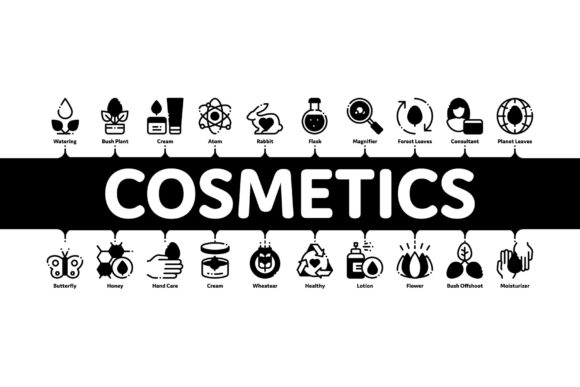
In an industry saturated with complex ingredient lists and dense regulatory certifications, clarity has become a premium asset. The modern beauty consumer demands transparency, yet they are often overwhelmed by technical jargon. This is where the Organic Cosmetics Minimal Infographic serves as a critical bridge between scientific formulation and consumer understanding. By leveraging clean lines, negative space, and intuitive iconography, these visual assets transform abstract data into accessible narratives. For brands, educators, and researchers, mastering this visual language is no longer optional; it is a fundamental component of effective communication in the natural beauty sector.
Bridging Molecular Science and Consumer Trust
One of the most significant challenges in marketing organic skincare is validating efficacy without resorting to synthetic associations. Consumers often equate "natural" with "gentle" but mistakenly assume it lacks potency. A well-executed Molecular Analysis illustration counters this misconception by visually demonstrating the bioactivity of plant-based compounds. When a vector graphic depicts the molecular structure of hyaluronic acid derived from fermentation or the lipid profile of rosehip oil, it grounds the product in tangible science.
This approach satisfies the E-E-A-T principle (Experience, Expertise, Authoritativeness, and Trustworthiness) by showing rather than just telling. Instead of a paragraph explaining how squalane mimics human sebum, a minimal diagram can illustrate the structural similarity side-by-side. This reduces cognitive load for the reader while simultaneously elevating the perceived value of the formulation. For researchers and formulators, these illustrations serve as educational tools that validate their work, proving that organic chemistry is as rigorous and precise as its synthetic counterpart.
The Semiotics of Natural Ingredient Pictograms
Minimalist pictograms function as a universal language in global commerce. In the context of organic cosmetics, these icons must perform double duty: they must identify the ingredient and convey its sensory or functional benefit. A simple line drawing of an aloe vera leaf is insufficient on its own. Effective Natural Ingredient Pictograms integrate subtle cues—a droplet for hydration, a shield for protection, or a sparkle for brightening—within the botanical silhouette.
- Abstraction vs. Realism: Minimal vectors prioritize abstraction to ensure scalability. A hyper-realistic rendering may lose detail when shrunk to 32 pixels for a mobile interface, whereas a geometric interpretation retains legibility across all touchpoints.
- Color Psychology: While minimal design often utilizes monochromatic palettes, strategic color coding helps categorize ingredients. Earth tones suggest grounding and nourishment, while cool greens and blues signal freshness and soothing properties.
- Cultural Neutrality: Standardized pictograms reduce localization costs. A stylized representation of shea butter is recognizable across markets without requiring translation, streamlining international packaging and digital asset deployment.
Technical Versatility: Leveraging EPS and JPG Formats
The utility of an Organic Cosmetics Minimal Infographic Web Banner Vector lies in its format flexibility. Understanding the distinct roles of EPS and JPG files is essential for maintaining brand integrity across different media channels. Professionals must treat these formats not as interchangeable options, but as specialized tools for specific stages of the production workflow.
EPS (Encapsulated PostScript) is the master source file. As a vector format, it uses mathematical equations rather than pixels to define shapes. This allows designers to scale a cruelty-free certification badge from a business card size to a billboard without any loss of resolution. The EPS file preserves layers, editable text, and individual path elements. This is crucial for customization; a brand using a stock infographic template can easily swap out a lavender icon for chamomile or adjust the stroke weight to match their existing style guide. Retaining the EPS ensures future-proofing, allowing assets to be adapted as packaging dimensions or web standards evolve.
Conversely, JPG serves as the delivery format for raster-based environments. Optimized for web performance and social media, JPGs offer a balance of quality and file size. However, reliance solely on JPGs limits adaptability. Once flattened, the elements cannot be separated or resized cleanly. Best practice dictates maintaining an organized library of EPS masters while exporting optimized JPGs only for final deployment. This workflow prevents the degradation of visual assets over time and ensures that high-resolution versions are always available for print collateral or large-format displays.
Communicating Ethical Standards Through Design
Ethical claims such as Cruelty-free Product status and eco-friendly sourcing require immediate visual verification. Textual disclaimers are frequently ignored or distrusted due to greenwashing fatigue. Minimal infographics address this by creating distinct, proprietary visual markers for ethical compliance. Rather than relying solely on third-party logos which can clutter a minimalist aesthetic, brands can develop integrated systems that communicate values through composition and symbol.
For example, an eco-friendly claim might be represented not just by a recycling symbol, but by a circular flow diagram illustrating the product’s lifecycle from sustainable harvest to biodegradable packaging. This adds depth to the claim, providing context that a standard logo lacks. Similarly, cruelty-free messaging can be softened and integrated into the overall design language through gentle, non-aggressive iconography that aligns with the compassionate nature of the brand. These visual cues act as heuristic shortcuts, allowing consumers to verify ethical alignment in milliseconds during the browsing process.
Applications Across Professional Verticals
The application of minimal organic cosmetic graphics extends far beyond direct-to-consumer marketing. Various stakeholders utilize these assets to achieve distinct objectives, making them a versatile resource in the broader ecosystem.
For Educators and Content Creators
Beauty educators and influencers rely on Scientific Research Illustration to differentiate their content in a crowded digital landscape. When explaining the difference between physical and chemical exfoliants, a comparative infographic provides higher retention rates than video or text alone. Minimalist designs are particularly effective for overlaying on video content or using as slide backgrounds because they do not compete with the speaker or primary footage. They provide a professional polish that signals authority, helping creators build trust with audiences seeking evidence-based advice.
For Formulators and R&D Teams
Internal communication within cosmetic companies often suffers from a disconnect between lab technicians and marketing teams. A technical illustrator can translate a formulator’s complex notes into a clear visual brief. Before a product launch, these infographics serve as alignment tools, ensuring that the marketing team understands the active mechanisms of the formula. This prevents overclaiming and ensures that external messaging accurately reflects the internal reality of the product. Furthermore, these assets are invaluable for investor presentations, where conveying innovation quickly is paramount.
For Retailers and Buyers
Buyers for major retailers scan thousands of SKUs. Packaging and digital sell sheets that utilize clear, minimal infographics allow key selling points to be absorbed instantly. A buyer can assess a product’s suitability for their "Clean Beauty" category by glancing at a standardized set of pictograms indicating vegan status, percentage of organic content, and packaging recyclability. This efficiency facilitates faster decision-making and reduces the back-and-forth clarification typically required during the vendor onboarding process.
Design Considerations for Regulatory Compliance
While aesthetics drive engagement, accuracy drives compliance. When utilizing Organic Cosmetics Minimal Infographic assets, professionals must navigate the intersection of design freedom and regulatory restriction. Visual representations of ingredients must not imply medical benefits unless substantiated. A pictogram suggesting "healing" for a cosmetic product could trigger regulatory scrutiny in jurisdictions like the EU or US.
Furthermore, the use of specific certification marks within custom infographics requires licensing and adherence to brand guidelines. Creating a custom icon that too closely resembles a trademarked organic seal can lead to legal issues. Designers must strike a balance between creating distinctive brand assets and respecting established regulatory symbols. Regular audits of visual assets against current labeling laws are necessary to maintain compliance. This diligence reinforces the brand's commitment to integrity, turning regulatory adherence into a competitive advantage rather than a burden.
Ultimately, the power of minimal infographic design in the organic cosmetics sector lies in its ability to distill complexity into clarity. Whether used to explain molecular interactions, verify ethical sourcing, or streamline retail buying, these visual tools facilitate a deeper connection between product and person. By prioritizing technical versatility through proper file management and adhering to principles of accurate, accessible design, stakeholders can leverage these assets to build lasting trust in an increasingly discerning market.