Bbq Barbecue Cooking Minimal Infographic: Visualizing Culinary Techniques
In the world of digital content creation and culinary marketing, clarity is often just as important as flavor. When communicating complex cooking processes or safety guidelines to an audience, dense text can quickly become overwhelming. This is where the strategic use of visual assets becomes indispensable. The Bbq Barbecue Cooking Minimal Infographic serves as a vital bridge between technical culinary knowledge and accessible consumer understanding. By stripping away unnecessary clutter and focusing on essential iconography, this design approach allows creators, business owners, and educators to convey grilling concepts with immediate impact.
Minimalism in infographic design is not merely an aesthetic choice; it is a functional necessity for modern web consumption. Whether you are designing a recipe card, a safety poster for a community park, or a product listing for grilling accessories, the ability to distill information into clean, recognizable symbols determines how effectively your message lands. Understanding the components, applications, and technical specifications of these vector resources ensures that your project maintains professional standards while remaining engaging to a general audience.
Deconstructing the Visual Elements
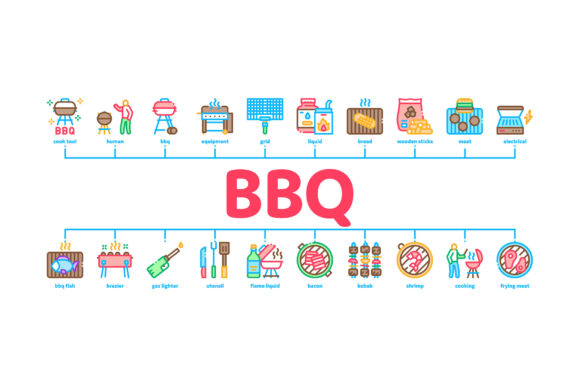
To fully leverage a Bbq Barbecue Cooking Minimal Infographic Web Banner Vector, one must first understand the specific iconography included within the asset pack. These illustrations are curated to represent the core pillars of outdoor cooking without relying on photorealism, which can sometimes distract from the instructional intent. The typical composition includes several key categories that resonate universally with barbecue enthusiasts.
Protein Representation
The centerpiece of any barbecue visual is the food itself. In a minimal style, proteins are rendered using simple lines and flat colors to ensure they remain legible at small sizes. Common elements include:
- Fried Meat and Shrimp: Representing versatility in protein preparation, these icons often feature stylized sear marks or steam lines to indicate heat and freshness.
- Fish and Bacon: These distinct shapes cater to diverse dietary preferences and cooking methods, signaling that the content covers more than just standard beef or poultry.
By using simplified representations rather than photographs, designers avoid issues related to appetite appeal variance. A photo of a steak might look unappetizing to some due to lighting or doneness, whereas a minimal vector icon remains neutral and informative across all cultural contexts.
Tools and Safety Equipment
Barbecue is as much about technique and safety as it is about ingredients. The inclusion of tool-based imagery transforms a decorative graphic into an educational resource. Assets depicting a utensil and gas lighter serve dual purposes. They identify necessary equipment for beginners while reinforcing safety protocols regarding ignition and handling. Similarly, illustrations of the grid and wood stick differentiate between direct grilling over metal grates and indirect smoking or skewering techniques. This visual distinction helps users quickly categorize recipes or safety tips without reading paragraphs of explanatory text.
Practical Applications Across Industries
The utility of a Bbq Barbecue Cooking Minimal Infographic extends far beyond personal blogs. Its clean aesthetic and scalable nature make it suitable for a wide array of professional and commercial environments. Understanding where these assets provide the most value helps stakeholders justify their integration into broader design systems.
Culinary Education and Safety Signage
Parks departments, campgrounds, and culinary schools frequently require signage that transcends language barriers. A minimal infographic featuring a gas lighter and grid can communicate fire safety rules more effectively than multilingual text blocks. In educational settings, these vectors act as cognitive anchors, helping students memorize equipment names and functions through visual association rather than rote memorization.
E-Commerce and Product Marketing
For online retailers selling grilling accessories, consistency in visual branding is crucial. Using a cohesive set of minimal vectors for category navigation or feature highlights creates a unified shopping experience. Instead of mixing disparate photography styles, a store can use the Bbq Fried Meat And Shrimp, Fish And Bacon illustrations to create uniform category headers. This reduces cognitive load for shoppers and reinforces brand identity through repetition of style.
Digital Content and Social Media
Social media platforms prioritize content that is instantly digestible. A Bbq Barbecue Cooking Minimal Infographic Web Banner Vector is perfectly sized and styled for Instagram stories, Pinterest pins, or YouTube thumbnails. The high contrast and lack of intricate detail ensure that the image remains clear even when viewed on mobile screens with reduced resolution. Content creators can overlay these vectors onto solid backgrounds to create quote cards, tip lists, or event announcements that stand out in crowded feeds.
Technical Considerations and File Formats
Selecting the right asset involves more than just liking the visual style; it requires understanding the technical deliverables. Most professional packs for this niche are provided in JPG and EPS formats, each serving distinct workflow needs.
Vector Versatility (EPS)
The Encapsulated PostScript (EPS) format is the industry standard for scalability. Because these files are mathematically defined rather than pixel-based, they can be resized infinitely without losing quality. This is critical for projects that span multiple mediums. You might use the same grid and wood stick illustration on a business card and a large-format vinyl banner. With EPS, there is no need to source separate files for different resolutions. Furthermore, EPS files allow for color customization. If your brand uses a specific shade of orange instead of the traditional barbecue red, you can modify the vector paths directly in software like Adobe Illustrator or Affinity Designer to maintain brand compliance.
Raster Convenience (JPG)
While less flexible, JPG files offer immediate usability for non-designers or quick-turnaround projects. They are universally compatible with word processors, presentation software, and basic image editors. For a local butcher shop creating a weekly flyer in Microsoft Word, the JPG version of the Bbq Barbecue Cooking Minimal Infographic provides a plug-and-play solution. However, users should be aware of the limitations: JPGs cannot be scaled up without pixelation, and background removal can be tedious if the file does not already have a transparent or white background optimized for placement.
Evaluating Suitability for Your Project
Before integrating these assets, it is important to assess whether the minimal aesthetic aligns with your communication goals. While highly effective for instruction and navigation, minimal infographics have specific strengths and limitations that dictate their best use cases.
When Minimalism Works Best
- Instructional Clarity: When the goal is to teach a process or list requirements, simplicity aids retention.
- Space Constraints: In web banners or app interfaces where screen real estate is limited, detailed illustrations compete with UI elements.
- Brand Modernization: Legacy brands looking to update their image often benefit from the clean, contemporary feel of line-art and flat-color vectors.
Potential Limitations
It is equally important to recognize when this style may fall short. Minimal infographics lack sensory texture. They cannot convey the juiciness of a burger or the char of a grill grate. If your primary goal is to stimulate appetite or showcase the premium quality of a specific food product, photography or hyper-realistic digital painting is superior. The Bbq Barbecue Cooking Minimal Infographic is an informational tool, not a sensory one. It tells the user what something is or how to do something, but it rarely conveys how it tastes.
Additionally, consider the cultural context of the icons. While a "gas lighter" is standard in many regions, other areas may rely primarily on charcoal chimneys or electric starters. Ensure the specific icons in your chosen vector pack reflect the actual practices of your target demographic. Customizability via EPS files can mitigate this risk, allowing you to swap out irrelevant tools for those that matter to your specific audience.
Best Practices for Implementation
To maximize the effectiveness of these visual assets, follow established design principles tailored for informational graphics. Consistency is paramount. Do not mix the minimal vector style with realistic photos or ornate hand-drawn sketches within the same layout. This visual dissonance confuses the hierarchy of information. Maintain adequate whitespace around each element; crowding the utensil and gas lighter icons against text reduces readability and negates the benefits of the minimal aesthetic.
Accessibility should also guide your implementation. Even though the infographic is visual, it must be paired with appropriate alt text and supporting copy. Screen readers cannot interpret that a collection of lines represents "fish and bacon." Descriptive metadata ensures that visually impaired users receive the same informational value as sighted users. Furthermore, ensure sufficient color contrast between the vector elements and the background. Minimal designs often use thin lines that can disappear against low-contrast backgrounds, rendering the infographic useless.
Ultimately, the Bbq Barbecue Cooking Minimal Infographic is a versatile asset class that empowers creators to communicate culinary concepts with precision and style. By understanding its component parts, respecting its technical formats, and applying it within appropriate contexts, professionals and hobbyists alike can elevate their content. Whether used to guide a novice griller through safety checks or to streamline the navigation of an e-commerce platform, these minimal vectors prove that in visual communication, less is often significantly more.