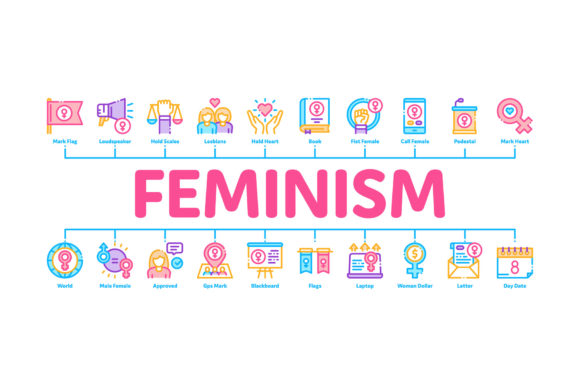
Feminism Woman Power Minimal Infographic: Visual Tools for Modern Advocacy and Branding
Visual communication has evolved beyond simple decoration. For content creators, educators, and business owners, a Feminism Woman Power Minimal Infographic serves as a functional bridge between complex social concepts and audience understanding. This isn't just about aesthetics; it is about clarity. When you utilize clean lines, negative space, and symbolic imagery like flags, GPS markers, or scales, you strip away the noise. You allow the core message of equality and empowerment to land immediately with your viewer. In an era where attention spans are short and digital feeds are cluttered, minimalism acts as a megaphone rather than a whisper.
Why Minimalism Works in Gender Equality Messaging
The choice to use a minimal style for feminist content is strategic, not accidental. Heavy, ornate designs can sometimes distract from the seriousness or the universality of the topic. A minimalist approach ensures that symbols—such as lesbians holding hands or the scales of justice—are recognized instantly across cultural and linguistic barriers. This visual shorthand is essential for web banners and social media graphics where users scroll quickly.
When a marketer or educator selects a vector-based infographic, they are choosing versatility. The clean geometry of these illustrations allows them to sit comfortably next to corporate text on a LinkedIn banner or blend seamlessly into a vibrant Instagram story. The lack of visual clutter signals confidence. It suggests that the organization or individual behind the message values substance over spectacle. This alignment between form and function builds trust with an audience that is increasingly savvy about performative activism versus genuine advocacy.
Practical Applications for Digital Creators and Marketers
For freelancers and agency designers, time is the most valuable currency. Creating custom iconography from scratch for every campaign is rarely feasible. Having access to pre-designed assets like a Feminism Woman Power Minimal Infographic Web Banner Vector accelerates production without sacrificing quality. Consider a social media manager tasked with launching a Women’s History Month campaign. They need cohesive visuals that cover multiple sub-topics: voting rights, workplace equity, and LGBTQ+ inclusion.
Using a unified vector set ensures brand consistency. If the campaign uses a specific shade of purple or teal, EPS files allow for instant color matching. The designer can pull the "flag" icon for a post about policy, swap to the "GPS mark" for a resource locator feature, and use the "scales" for a discussion on legal rights, all while maintaining a singular visual identity. This cohesion makes the campaign look professional and intentional, which significantly increases engagement rates compared to mismatched stock photos.
Educational Use Cases and Non-Profit Outreach
Educators and non-profit organizers often face the challenge of explaining systemic issues to diverse age groups. Abstract concepts like "intersectionality" or "wage gaps" can be difficult to grasp through text alone. Here, infographics become teaching tools. A minimal illustration of hand-held scales can visually demonstrate the concept of equity versus equality in a classroom setting or a community workshop presentation.
Furthermore, non-profits frequently operate with limited budgets. High-quality vector assets allow small teams to produce annual reports, grant proposals, and donor newsletters that rival those of major institutions. When a donor receives a report featuring clean, professional data visualization alongside emotive but respectful symbolism, it reinforces the organization's competence. The GPS mark symbol, for instance, could be repurposed in a newsletter to show "where we are going" regarding strategic goals, turning a static icon into a narrative device.
Understanding File Formats: JPG vs. EPS
Selecting the right format is just as important as selecting the right image. Understanding the technical differences between JPG and EPS files prevents frustration down the line.
- EPS (Encapsulated PostScript): This is your master file. It is vector-based, meaning it uses mathematical equations rather than pixels. You can scale an EPS file to the size of a billboard or shrink it to a favicon without any loss of quality. This format is essential for print materials like t-shirts, tote bags, posters, and large-format banners. It also allows you to ungroup elements and edit colors directly in software like Adobe Illustrator or Affinity Designer.
- JPG (Joint Photographic Experts Group): This is a raster format best suited for quick digital use. It comes with a solid background and fixed resolution. Use JPGs for email signatures, blog post headers, or social media uploads where you do not need to alter the design. While convenient, JPGs will pixelate if enlarged too much and cannot be easily recolored.
Smart users download both. Keep the EPS archived for future large-scale projects or rebranding efforts, and use the JPG for immediate, day-to-day content needs.
Navigating Symbolism and Inclusivity
When incorporating illustrations involving specific identities, such as lesbians holding hands or diverse representations of womanhood, context matters. Authenticity is paramount. Audiences can distinguish between genuine representation and tokenism. Before using a specific asset, consider whether it aligns with your actual values and the reality of your community or workforce.
If you are a business owner using these graphics for commercial purposes, ensure your internal practices match the external messaging. Using a feminism symbol on a flag while having inequitable hiring practices can lead to backlash. However, when used correctly, these symbols foster connection. For example, a therapist specializing in LGBTQ+ mental health might use the "lesbians holding hands" illustration on their website to signal safety and specialized care to prospective clients before they even read a single word of copy. In this scenario, the graphic performs vital emotional labor.
Customization and Legal Considerations
One of the greatest benefits of vector assets is the ability to customize. Do not feel locked into the default composition. A minimal infographic is designed to be modular. You might combine the GPS marker with the scales to create a new metaphor for "navigating justice." You might change the skin tones or clothing styles in the illustrations to better reflect your local demographic.
Always verify licensing terms before use. Some vectors are free for personal use but require attribution or a paid license for commercial applications. Entrepreneurs selling merchandise featuring these designs must ensure they have the appropriate commercial rights. Respecting intellectual property is part of ethical business practice. Additionally, modifying the artwork enough to make it unique to your brand not only avoids legal gray areas but also prevents your content from looking identical to everyone else using the same resource pack.
Making the Right Choice for Your Project
Before downloading or purchasing a Feminism Woman Power Minimal Infographic, assess your specific needs. Are you trying to convey data, emotion, or navigation? If you are presenting statistics on gender pay gaps, look for sets that include chart elements integrated with feminist iconography. If you are promoting an event, prioritize assets with clear focal points that leave room for typography.
Consider the longevity of the design. Trends in illustration shift rapidly, but minimalism tends to age well because it relies on fundamental shapes rather than stylistic fads. Investing in high-quality, timeless vectors provides a return on investment that trendy, detailed illustrations often cannot match. Ultimately, the goal is to find resources that empower your message without overpowering it. The best infographic is one that supports your voice, clarifies your intent, and respects the dignity of the subjects it represents.