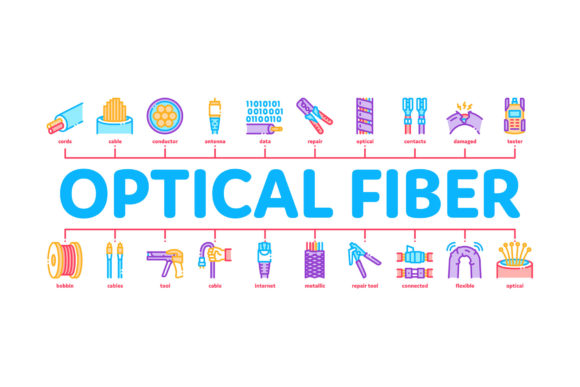
Optical Fiber Cable Minimal Infographic: Strategic Visual Communication for Technical Audiences
In technical industries, clarity is not merely an aesthetic preference; it is a functional requirement. The Optical Fiber Cable Minimal Infographic serves as a critical bridge between complex engineering realities and stakeholder understanding. Whether you are managing network infrastructure projects, creating educational content for telecommunications training, or marketing fiber optic testing services, the ability to distill intricate systems into clean, digestible visuals determines how effectively your message lands. This specific visual asset, often accompanied by an Optical Fiber Cable Minimal Infographic Web Banner Vector, provides a standardized framework for communicating maintenance procedures, equipment specifications, and safety protocols without the cognitive overload associated with dense technical manuals.
Strategic use of these minimal infographics goes beyond simple decoration. For entrepreneurs and decision-makers in the ISP, data center, or electrical contracting sectors, these assets function as operational tools. They standardize internal communication, reduce onboarding time for new technicians, and enhance client-facing proposals by demonstrating professionalism and attention to detail. When utilized intentionally, a high-quality vector illustration of fiber repair instruments, cord roll bobbins, and connection tests transforms abstract service descriptions into tangible value propositions.
Aligning Visual Assets with Operational and Marketing Goals
Before integrating an Optical Fiber Cable Minimal Infographic into your workflow, it is essential to define the specific outcome you intend to achieve. Randomly placing technical clip art on a website or slide deck rarely yields measurable returns. Instead, consider how this visual asset supports broader organizational objectives across three primary domains:
- Operational Efficiency and Safety: In field operations, ambiguity leads to errors and accidents. A minimal infographic depicting the correct sequence for using a fiber repair instrument or identifying damaged color codes serves as a quick-reference job aid. Unlike photorealistic images that may contain distracting background noise, minimal vector art isolates the relevant variables, allowing technicians to focus entirely on the procedure. This directly supports goals related to reducing mean-time-to-repair (MTTR) and maintaining safety compliance.
- Educational Clarity and Knowledge Transfer: For educators and trainers, the challenge lies in scaffolding complex concepts. An Optical Fiber Cable Minimal Infographic Web Banner Vector can act as a visual anchor for lesson modules regarding signal attenuation, splicing techniques, or cable management. By presenting information in a structured, minimalist format, learners can build mental models more efficiently than through text alone. This supports long-term retention and reduces the friction associated with technical upskilling.
- Brand Positioning and Trust Signaling: In B2B marketing, clients often lack the expertise to evaluate technical competence directly. They rely on proxies. High-fidelity, accurate vector illustrations of specialized equipment like test connections and bobbin rolls signal that your organization understands the nuances of the trade. Generic stock photography suggests a lack of specialization, whereas precise, industry-specific minimal graphics reinforce authority and expertise.
Technical Versatility: Leveraging JPG and EPS Formats
The strategic value of an Optical Fiber Cable Minimal Infographic is heavily dependent on file format flexibility. Understanding when to deploy JPG versus EPS files is a practical necessity for maintaining quality across different media channels.
Vector Scalability for Print and Large Format
The EPS (Encapsulated PostScript) format is indispensable for professional applications requiring infinite scalability. Because vectors are defined by mathematical paths rather than pixels, they remain crisp at any size. This makes the EPS version of the optical fiber infographic ideal for:
- Trade Show Banners and Signage: Large-format printing demands high resolution. A pixelated image on a booth backdrop undermines credibility. Vector files ensure that details of the fiber repair instrument and cable anatomy remain sharp even when printed at several feet wide.
- Technical Manuals and Documentation: Printed guides often require zooming or high-DPI rendering. Vectors allow publishers to adjust line weights and colors dynamically to match the publication’s style guide without losing definition.
- Customization and Editing: Designers can open EPS files in Adobe Illustrator or CorelDRAW to modify specific elements. If your company uses color-coded cables differently than the default illustration, or if you need to highlight a specific brand of testing device, the vector format allows for non-destructive editing. This adaptability extends the asset's lifespan and relevance.
Raster Optimization for Digital Speed
While vectors offer superior quality, JPG formats serve a distinct purpose in digital ecosystems where load times and compatibility matter. The JPG version of the Optical Fiber Cable Minimal Infographic should be reserved for:
- Web Content and Blog Posts: Modern browsers handle raster images efficiently. For web banners or inline article illustrations, a properly compressed JPG ensures fast page loads, which is a ranking factor for SEO and user experience.
- Email Newsletters and Presentations: Many email clients and presentation software platforms struggle with embedded vector files. Pre-rendered JPGs guarantee that your audience sees the intended visual regardless of their device or software version.
- Social Media Sharing: Platforms like LinkedIn or X (formerly Twitter) require rasterized uploads. Using the JPG variant ensures consistent branding across social channels without the need for real-time conversion.
Contextual Application: When and How to Deploy
Possessing the asset is only the first step; applying it with contextual awareness separates effective communicators from amateurs. The Optical Fiber Cable Minimal Infographic is most powerful when it solves a specific communication problem rather than filling empty space.
Enhancing Proposals and Service Descriptions
When drafting proposals for fiber network installation or maintenance contracts, avoid walls of text describing equipment lists. Pair the textual specification with the minimal infographic showing the cord roll bobbin and testing devices. This dual-coding approach helps procurement officers and non-technical stakeholders visualize exactly what they are purchasing. It reduces back-and-forth clarification emails and accelerates the approval cycle by making the scope of work immediately apparent.
Standardizing Internal SOPs
For operations managers, consistency is key to quality control. Integrate the infographic into Standard Operating Procedures (SOPs) for cable handling and testing. Rather than writing paragraphs about "proper bending radius" or "connector inspection," use the visual to demonstrate acceptable versus unacceptable conditions. This is particularly valuable for multilingual teams where visual universals transcend language barriers. However, ensure the infographic is accompanied by concise, localized text captions to prevent misinterpretation.
Supporting Content Marketing Strategies
Content creators and bloggers covering telecommunications topics can use the Optical Fiber Cable Minimal Infographic Web Banner Vector to break up long-form technical articles. Place the visual near sections discussing specific repair methodologies or equipment reviews. This improves dwell time by providing visual rest points and reinforces the article's topical relevance for search engines. Ensure alt text accurately describes the image contents (e.g., "Minimalist vector diagram of fiber optic fusion splicer and cable testing equipment") to maximize accessibility and SEO value.
Risk Mitigation: Avoiding Common Pitfalls
Despite its utility, relying on an Optical Fiber Cable Minimal Infographic without due diligence carries risks. Minimalism, by definition, involves abstraction. Abstraction can sometimes omit critical safety or procedural details.
Accuracy Verification: Never assume a stock vector is technically perfect. Before publishing or printing, have a subject matter expert review the illustration. Does the fiber repair instrument depicted match current industry standards? Are the color codes for the damaged cable illustration accurate according to TIA-598 or your local standards? An aesthetically pleasing but technically incorrect diagram is worse than no diagram at all; it actively teaches bad practices and exposes your organization to liability.
Over-Simplification: Minimal infographics are excellent for overviews and conceptual explanations, but they are poor substitutes for detailed schematics or wiring diagrams. Do not use this asset where precision measurements, pinout configurations, or torque specifications are required. Clearly label the graphic as "illustrative" or "conceptual" if there is any risk that a technician might mistake it for a definitive engineering drawing.
Licensing and Usage Rights: Always verify the license terms associated with the JPG and EPS files. Some licenses restrict commercial modification or require attribution. For businesses planning to incorporate the graphic into proprietary training materials or client deliverables, ensure you hold the appropriate commercial rights to avoid future legal complications.
Making Informed Decisions About Visual Assets
Ultimately, the decision to utilize an Optical Fiber Cable Minimal Infographic should be driven by a clear assessment of audience needs and communication gaps. Ask yourself: Does this visual reduce cognitive load for my target reader? Does it accurately represent the equipment and processes we discuss? Is the format (JPG vs. EPS) appropriate for the delivery channel?
For freelancers and small business owners, investing in high-quality, editable vector assets like this represents a leverage point. It allows you to produce professional-grade collateral that rivals larger competitors without hiring a full-time technical illustrator. For marketers and educators, it provides a reusable component that maintains consistency across campaigns and curricula.
By approaching this asset strategically—focusing on accuracy, format suitability, and specific user outcomes—you transform a simple graphic element into a functional tool that supports learning, enhances brand perception, and facilitates better decision-making across your organization. The goal is never just to show a picture of a fiber cable; the goal is to enable understanding, inspire confidence, and drive action through deliberate visual design.