Franchise Business Minimal Infographic Guide
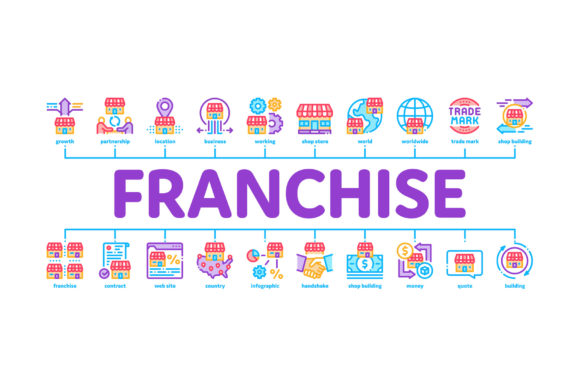
Visualizing complex business models requires clarity, and a franchise business minimal infographic serves as an essential bridge between dense corporate data and audience understanding. At its core, this type of visual asset strips away unnecessary decoration to focus purely on the structural relationships within a franchising ecosystem. When utilizing a franchise business minimal infographic web banner vector, designers and business owners are not just looking for pretty pictures; they are seeking a functional communication tool that illustrates concepts like trademark licensing, global branch expansion, and contractual agreements through clean, scalable geometry.
The specific imagery associated with these assets—wide world branches connected by nodes, dollar signs representing royalty flows, and handshakes symbolizing partnership contracts—carries significant semantic weight. For different audiences, however, the value proposition of these visuals shifts dramatically. A marketing director at a national chain views this asset through the lens of brand consistency and conversion, while a freelance graphic designer evaluates it based on layer organization and editability. Understanding these distinct perspectives is crucial for selecting and utilizing the right JPG or EPS files for your specific project needs.
Divergent Needs Across Professional Roles
The utility of a minimal infographic is rarely universal. It changes depending on who is holding the mouse and what message they intend to convey. Recognizing these differences helps prevent mismatched expectations when sourcing or creating visual content.
Entrepreneurs and Franchisors
For business owners expanding their operations, the primary priority is trust and scalability. When an entrepreneur presents a franchise opportunity to potential investors or new franchisees, the visual language must communicate stability. A cluttered or overly artistic infographic can inadvertently suggest operational chaos. In this context, a minimal design featuring a stylized world map with connected branches does more than show geography; it implies a replicable system. The handshake and contract illustrations serve as visual anchors for legal security, reassuring stakeholders that the business model is built on solid contractual foundations rather than vague promises. Here, the commercial value lies in the asset's ability to shorten sales cycles by making abstract legal and financial concepts instantly digestible.
Marketers and Content Creators
Marketing professionals approach these infographics with a focus on flexibility and speed. A web banner vector is particularly valuable because it allows for rapid adaptation across digital touchpoints. Marketers need assets that can be resized for LinkedIn headers, blog post features, or email newsletters without losing fidelity. The "minimal" aspect is strategically important here; negative space allows for the overlay of custom copy, CTAs, or seasonal branding without requiring extensive photo manipulation. For this group, the quality of the EPS file matters immensely. They need organized layers and grouped elements so they can swap out a generic dollar sign for a specific currency symbol or adjust the color palette to match a client’s brand guidelines in minutes, not hours.
Educators and Students
In academic or training environments, the priority shifts to learning value and conceptual accuracy. Business students and educators use these infographics to deconstruct the mechanics of franchising. Unlike marketers who might stylize reality for appeal, educators need diagrams that accurately represent the flow of royalties, fees, and support services. A minimal infographic works well in slide decks and textbooks because it reduces cognitive load, allowing learners to focus on the relationship between the franchisor and franchisee rather than decoding complex artwork. For this audience, the inclusion of clear iconography regarding trademarks and contracts is vital for teaching intellectual property law and business ethics effectively.
Evaluating Technical Formats and Usability
Beyond the strategic application, the practical decision often comes down to technical specifications. Whether you are a seasoned designer or a small business owner attempting a DIY update, understanding the difference between available formats determines long-term usefulness.
- EPS (Encapsulated PostScript): This is the industry standard for vectors. If you plan to print large-format signage for a trade show booth or need to extensively modify the illustration, EPS is non-negotiable. It allows for infinite scaling without pixelation and provides access to individual anchor points. For professionals, this format represents reliability and creative freedom.
- JPG (Joint Photographic Experts Group): While less flexible, JPGs offer immediate usability for beginners or quick-turnaround projects. If you are a blogger embedding an image into a CMS or a hobbyist creating a personal presentation, a high-resolution JPG eliminates the need for specialized vector software. However, users should be aware that JPGs lack transparency and cannot be edited structurally, limiting their long-term commercial value.
When evaluating a specific franchise business minimal infographic, inspect the preview for line weight consistency and color separation. High-quality vectors will have uniform stroke widths and logical color grouping, which significantly impacts ease of use. Poorly constructed vectors may look fine as a thumbnail but become a nightmare to edit when nodes are overlapping or colors are merged into rasterized effects.
Aligning Visual Assets with Project Goals
Selecting the right infographic is ultimately an exercise in aligning visual tone with organizational objectives. There is no single "best" asset, only the one that best fits your current constraints and aspirations.
If your goal is brand establishment, prioritize assets that feature strong, recognizable symbols of commerce and partnership. Look for illustrations where the handshake and contract are prominent, as these speak directly to the relational nature of franchising. Avoid overly abstract representations that might confuse viewers unfamiliar with the business model. Consistency in icon style across multiple banners or slides also reinforces professional credibility.
Conversely, if your goal is data visualization, seek out templates that emphasize structure over symbolism. You might prefer a layout dominated by the "wide world branches" motif, providing ample space to insert actual statistics, growth percentages, or territory maps. In this scenario, the dollar signs and handshakes should be secondary accents rather than focal points, ensuring the data remains the hero of the narrative.
For freelancers and agencies managing multiple clients, versatility is key. A neutral, minimal aesthetic acts as a chameleon, easily adapting to various industries from fast food to consulting services. Investing time in finding a comprehensive vector pack with interchangeable elements can yield higher ROI than purchasing single-use images. This approach supports both creativity and efficiency, allowing you to deliver bespoke-looking presentations without starting from scratch every time.
Making the Right Choice for Your Skill Level
Honest self-assessment regarding technical capability is just as important as defining the business need. Beginners and non-designers should not feel pressured to work with EPS files if they lack the software or skills to manipulate them. Utilizing a high-quality JPG in a Canva or PowerPoint template can produce professional results without the steep learning curve of Adobe Illustrator. The risk of distorting a vector file through improper editing often outweighs the benefits of having it.
Experienced users, however, should scrutinize the construction of the vector before acquisition. Check for expandable strokes, global color swatches, and logical layer naming. These details distinguish a premium resource from a generic stock item. A well-constructed franchise business minimal infographic saves hours of cleanup time and ensures that the final output looks crisp whether viewed on a mobile screen or printed on a vinyl banner.
Ultimately, these visual tools exist to simplify complexity. Whether illustrating the flow of international trade marks or explaining a local partnership agreement, the right minimal infographic clarifies the message. By considering your specific role, technical capacity, and end goal, you can select assets that do more than decorate—they communicate, educate, and convert.