Leatherworking Job Minimal Infographic Guide
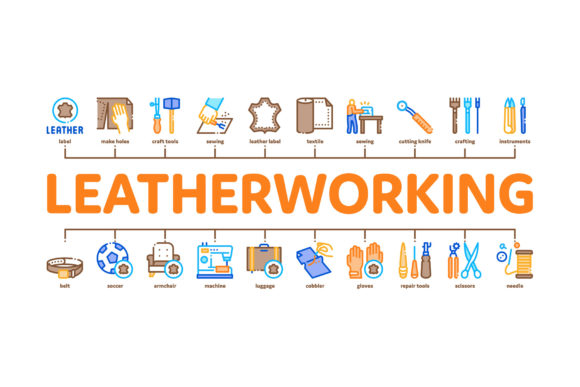
Visual communication in the craft industry often struggles to balance technical accuracy with aesthetic appeal. The Leatherworking Job Minimal Infographic addresses this specific challenge by stripping away unnecessary clutter to focus on the essential elements of the trade. This visual asset typically features clean lines and distinct iconography representing leatherworking material and equipment, an instrument for cut leather and worker interactions, and classic motifs like ball and belt illustrations. Rather than overwhelming the viewer with photorealistic textures, this minimal approach uses negative space and simplified geometry to convey professionalism and clarity.
For designers and content creators, understanding the utility of this specific style is crucial. It serves as more than just decoration; it acts as a functional communication tool that translates complex manual processes into digestible visual information. Whether used in educational materials, marketing campaigns, or internal documentation, the minimalist aesthetic ensures that the message remains accessible across different platforms and demographics.
Diverse Applications Across Skill Levels
The value of a Leatherworking Job Minimal Infographic shifts significantly depending on who is using it and for what purpose. A master craftsman might view the illustration as a stylistic representation of their heritage, while a digital marketer sees it as a high-conversion visual hook. Recognizing these distinctions helps users select the right variation or customize the vector files effectively.
Educators and Workshop Instructors
For those teaching leathercraft, clarity is paramount. Beginners often feel intimidated by the array of specialized tools and techniques involved in working with hide. A detailed photograph can sometimes obscure the mechanics of a stitch or a cut due to shadows or background noise. In contrast, a minimal infographic isolates the action. When explaining the proper use of an instrument for cut leather, a simplified diagram allows students to focus entirely on hand placement and blade angle without distraction.
Educators prioritize assets that offer high learning value and flexibility. The ability to edit EPS files means an instructor can adjust colors to match school branding or separate individual icons to create step-by-step flashcards. For this audience, the infographic is a pedagogical scaffold that supports curriculum development and enhances student retention through consistent visual language.
Small Business Owners and Marketers
Entrepreneurs selling leather goods or services operate in a crowded digital marketplace. Their priority is often speed and commercial viability. A web banner vector featuring leatherworking themes provides an instant professional polish to websites and social media headers. Unlike custom photography, which requires staging, lighting, and editing time, a pre-made minimal infographic can be deployed immediately to announce a sale, launch a new product line, or define brand identity.
Marketing professionals also look for versatility in file formats. Having access to both JPG and EPS versions ensures the asset works everywhere from a tiny Instagram story sticker to a large-format trade show backdrop. The minimal style is particularly effective here because it scales perfectly; intricate details that would get lost at small sizes remain legible, while the bold shapes command attention on larger displays. This reliability reduces design friction and maintains brand consistency across touchpoints.
Hobbyists and Content Creators
Bloggers, vloggers, and hobbyist makers often lack professional design training but still want their content to look polished. For this group, ease of use is the deciding factor. They may not have advanced vector software skills, making the included JPG format immediately valuable for thumbnails, blog headers, or printable workshop posters. However, the availability of the EPS format offers a growth path; as their skills develop, they can explore customizing the artwork to better reflect their unique niche within the leatherworking community.
Creators also value the narrative aspect of the ball and belt illustration. These iconic symbols serve as visual shorthand, instantly signaling to viewers that the content relates to traditional craftsmanship, durability, or fashion accessories. This semantic connection helps attract the right audience organically, improving discoverability without relying solely on text-based SEO.
Evaluating Quality and Technical Specifications
Not all infographics are created equal. When assessing whether a Leatherworking Job Minimal Infographic meets your needs, consider several technical and practical dimensions beyond simple aesthetics. The quality of the source file dictates how long the asset will remain useful in your library.
- Vector Integrity: True EPS files should allow for infinite scaling without pixelation. Check that curves are smooth and nodes are optimized. Poorly traced vectors can look jagged when enlarged for print, undermining the professional minimal aesthetic.
- Layer Organization: For users intending to modify the design, organized layers are non-negotiable. Equipment, workers, and background elements should be separated logically. This structure saves hours of ungrouping and reassembling when adapting the banner for different orientations.
- Color Mode Flexibility: Verify if the file supports easy conversion between CMYK for print and RGB for screen. Minimal designs rely heavily on color contrast, so ensuring the palette translates well across mediums prevents muddy outputs in physical brochures or dull appearances on backlit screens.
- Semantic Accuracy: Ensure the depicted tools and techniques are accurate to real-world leatherworking. Enthusiasts and professionals will notice if a knife is held incorrectly or if a stitching awl looks like a generic needle. Authenticity builds trust, even in abstract art.
Matching Assets to Project Goals
Selecting the right visual asset requires honest self-assessment regarding project scope and resources. A Leatherworking Job Minimal Infographic is ideal for projects demanding modern cleanliness and quick turnaround times. It fits seamlessly into contemporary web design, instructional manuals, and sleek packaging. However, it may not suit every scenario.
If your goal is to showcase the tactile grain of a specific exotic leather or the patina of an aged vintage piece, minimalism might be too sterile. In such cases, photography or textured illustration would better serve the sensory nature of the content. Conversely, if you are creating a comprehensive guide to safety protocols or a catalog of tool categories, the minimal infographic excels because it standardizes disparate objects into a cohesive system.
Consider also the longevity of the asset. Trends in maximalism and grunge come and go, but functional minimalism tends to age gracefully. Investing in high-quality vector formats like EPS ensures that the Leatherworking Job Minimal Infographic remains a staple in your creative toolkit for years. You can recolor it to match seasonal campaigns or rearrange elements to fit new layout requirements without ever needing to repurchase or redesign from scratch.
Practical Implementation Tips
To maximize the effectiveness of this asset, integrate it thoughtfully rather than treating it as mere filler. When using the web banner vector, ensure adequate padding around the central illustrations so they do not conflict with navigation menus or overlay text. For educational prints, pair the minimal icons with concise typography that matches the weight and style of the illustration. Consistency between type and image reinforces the professional tone.
For those working with the JPG format, remember that resolution matters. Always use the highest resolution version available for print to avoid blurriness. If resizing is necessary, maintain the original aspect ratio to prevent distortion of the carefully balanced proportions. Digital users should optimize file size for web performance without sacrificing sharpness on high-DPI displays, ensuring the infographic loads quickly while retaining its crisp, minimal edges.
Ultimately, the Leatherworking Job Minimal Infographic bridges the gap between traditional craft and modern digital communication. By focusing on essential forms and providing flexible file formats, it empowers a wide range of users to tell their stories effectively. Whether you are teaching a class, selling bespoke belts, or documenting your creative journey, this visual tool offers a reliable foundation for clear, engaging, and professional presentation.