Strategic Application of the Psychotherapy Help Minimal Infographic for Professional Communication
Visual assets in mental health and wellness sectors often struggle to balance clinical accuracy with approachable design. The Psychotherapy Help Minimal Infographic serves as a strategic solution for professionals who need to communicate complex therapeutic concepts without overwhelming their audience. For entrepreneurs, clinic owners, educators, and content creators, this vector-based resource is not merely decorative; it is a functional tool for reducing cognitive load and establishing immediate trust. When utilized intentionally, these minimal illustrations bridge the gap between abstract psychological processes and tangible user understanding, facilitating better decision-making for potential clients or patients navigating their care options.
Defining Strategic Utility in Mental Health Visuals
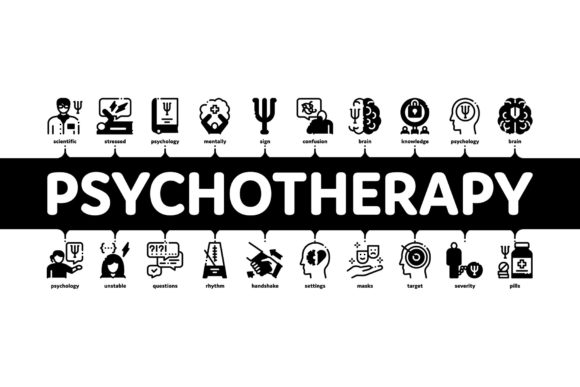
The value of a Psychotherapy Help Minimal Infographic lies in its reductionist approach. Unlike detailed medical diagrams that may induce anxiety or confusion, minimal vector art focuses on symbolic representation. The specific imagery of a handshake and brain, or a psychotherapist and patient interaction, distills the essence of therapy into universally understood metaphors. This visual shorthand is critical for digital environments where attention spans are limited and emotional bandwidth is often low.
For marketers and publishers, this asset type supports several high-level objectives:
- Cognitive Ease: Simplified visuals process faster in the brain, allowing users to grasp the concept of "help" or "treatment" before reading a single word of copy.
- Emotional Safety: Minimalist aesthetics tend to feel less clinical and sterile, creating a softer entry point for individuals hesitant about seeking mental health support.
- Brand Consistency: Vector formats (EPS) allow for infinite scaling and color customization, ensuring the psychotherapy treatment illustration aligns perfectly with existing brand guidelines across web banners, print materials, and social media.
- Versatility: The same core asset can function as a hero image on a landing page, an icon in an educational brochure, or a thumbnail for a video series.
Understanding these utilities shifts the perspective from viewing the graphic as "clip art" to recognizing it as a component of user experience (UX) design. It becomes a mechanism for guiding attention and framing the narrative around mental health services.
Integrating Assets into Planning and Positioning
Effective use of the Psychotherapy Help Minimal Infographic requires alignment with broader organizational goals. Before downloading or deploying these vectors, decision-makers should evaluate how the visual supports their specific positioning strategy. A private practice focusing on trauma recovery may require different visual cues than a corporate wellness program emphasizing stress management.
Audience-Centric Selection Criteria
When planning content calendars or website overhauls, consider the demographic and psychographic profile of your target audience. Adults aged 20–50, particularly professionals and entrepreneurs, often respond best to visuals that respect their intelligence while acknowledging their vulnerability. The handshake and brain motif, for example, suggests a partnership model of therapy rather than a hierarchical doctor-patient dynamic. This subtle distinction can significantly impact conversion rates for coaching services or modern talk therapy practices.
Conversely, if your goal is to educate caregivers or family members, the psychotherapist and patient illustration might be more appropriate as it visually reinforces the professional boundary and the structured nature of treatment. Strategic planning involves matching the specific variation of the infographic to the user intent at that specific touchpoint.
Operational Efficiency in Content Creation
For freelancers, bloggers, and small business owners, resource allocation is a constant challenge. Utilizing high-quality, editable EPS files streamlines production workflows. Instead of commissioning custom illustrations for every new article or campaign, teams can build a cohesive visual library using variations of the Psychotherapy Help Minimal Infographic. This approach maintains visual consistency—a key factor in brand recall—while reducing the time and cost associated with creative development. The ability to modify colors and isolate elements within vector software ensures that the asset remains relevant across seasonal campaigns and evolving service offerings.
Practical Implementation Across Digital and Print Channels
The technical versatility of JPG and EPS formats enables diverse applications, but execution matters as much as format. Thoughtful implementation enhances credibility, whereas careless placement can undermine the message.
Web Banners and Landing Pages
In digital advertising and web design, the Psychotherapy Help Minimal Infographic Web Banner Vector functions as a primary anchor. When designing above-the-fold content, ensure the illustration complements rather than competes with your headline. Negative space is essential; minimal graphics require breathing room to maintain their aesthetic integrity. Use the vector’s clean lines to direct the eye toward call-to-action buttons or appointment scheduling widgets. For mental health apps or telehealth platforms, these banners serve as immediate signals of safety and professionalism, reducing bounce rates among anxious visitors.
Educational Materials and Patient Resources
For educators and clinicians, these infographics are invaluable in psychoeducation. Explaining the therapeutic alliance or the neurological benefits of counseling can be abstract. A well-placed illustration of a handshake and brain provides a visual reference point during consultations or in take-home PDFs. This aids retention and helps normalize the therapeutic process. In this context, the graphic is not marketing; it is a clinical adjunct that facilitates communication and manages expectations.
Social Media and Community Building
Creators and influencers in the wellness space can leverage these minimal vectors to create shareable, non-triggering content. Complex topics like boundaries, attachment styles, or burnout are more digestible when paired with clean, neutral imagery. The minimal style avoids the sensationalism often associated with mental health content on social platforms, fostering a more thoughtful and engaged community dialogue. By maintaining a consistent visual language, creators build a recognizable identity that audiences associate with reliable information.
Risk Mitigation and Contextual Awareness
While the Psychotherapy Help Minimal Infographic offers significant advantages, relying on it without clear goals or contextual awareness carries risks. Visual communication in mental health is sensitive territory, and missteps can damage trust or alienate the very people you intend to help.
Avoiding Generic Representation
The primary risk of minimal vector art is sterility. If used indiscriminately, these graphics can make a practice or publication feel impersonal or mass-produced. To mitigate this, always pair the infographic with authentic, human-centric copy. The vector sets the tone, but the text must provide the warmth and specificity that the illustration cannot convey alone. Additionally, consider customizing the vector’s color palette to avoid the generic "medical blue" trope unless that specifically aligns with your brand strategy. Warm neutrals, greens, or soft earth tones can signal a more holistic or integrative approach.
Cultural and Demographic Sensitivity
Minimalist illustrations often abstract human features to achieve universality, but this abstraction can sometimes erase important cultural markers. Decision-makers must assess whether the chosen representation resonates with their specific community. If your audience values seeing explicit diversity, a highly abstract handshake might feel evasive. In such cases, use the minimal infographic as a supplementary element alongside photography or more detailed illustrations that reflect the lived experiences of your clientele. Intentionality means recognizing what the graphic cannot do and filling those gaps with other resources.
Misalignment with Clinical Reality
There is a danger in making therapy look too simple or effortless through overly sanitized visuals. While we want to reduce stigma, we must also avoid minimizing the difficulty of the work. Ensure that the Psychotherapy Help Minimal Infographic is framed within content that acknowledges the complexity of healing. Use the graphic to illustrate the support structure or the goal, rather than implying that the process itself is easy. This nuance preserves E-E-A-T (Experience, Expertise, Authoritativeness, and Trustworthiness) by demonstrating a realistic understanding of mental health treatment.
Making Informed Decisions for Long-Term Value
Ultimately, the decision to incorporate the Psychotherapy Help Minimal Infographic into your visual strategy should be driven by outcomes, not trends. Ask specific questions during your planning phase: Does this visual clarify our value proposition? Does it reduce friction for users seeking help? Does it align with our ethical standards and brand voice?
For entrepreneurs and small business owners, investing in high-quality vector assets is an investment in scalable communication. Unlike raster images that degrade over time or become outdated, clean vector illustrations possess longevity. They adapt to new mediums, resize without loss, and can be refreshed with color updates as your brand evolves. This makes them a cost-effective foundation for long-term visual identity.
However, the most successful practitioners and creators treat these assets as starting points, not solutions. They integrate the Psychotherapy Help Minimal Infographic into a broader ecosystem of thoughtful content, empathetic user journeys, and genuine expertise. When used with this level of strategic intention, minimal infographics transcend their role as mere decoration. They become active participants in the therapeutic alliance, helping to demystify mental health care and guide individuals toward the support they need with clarity, dignity, and respect. By prioritizing function over form and context over convenience, professionals can leverage these tools to achieve meaningful results in both communication and care delivery.